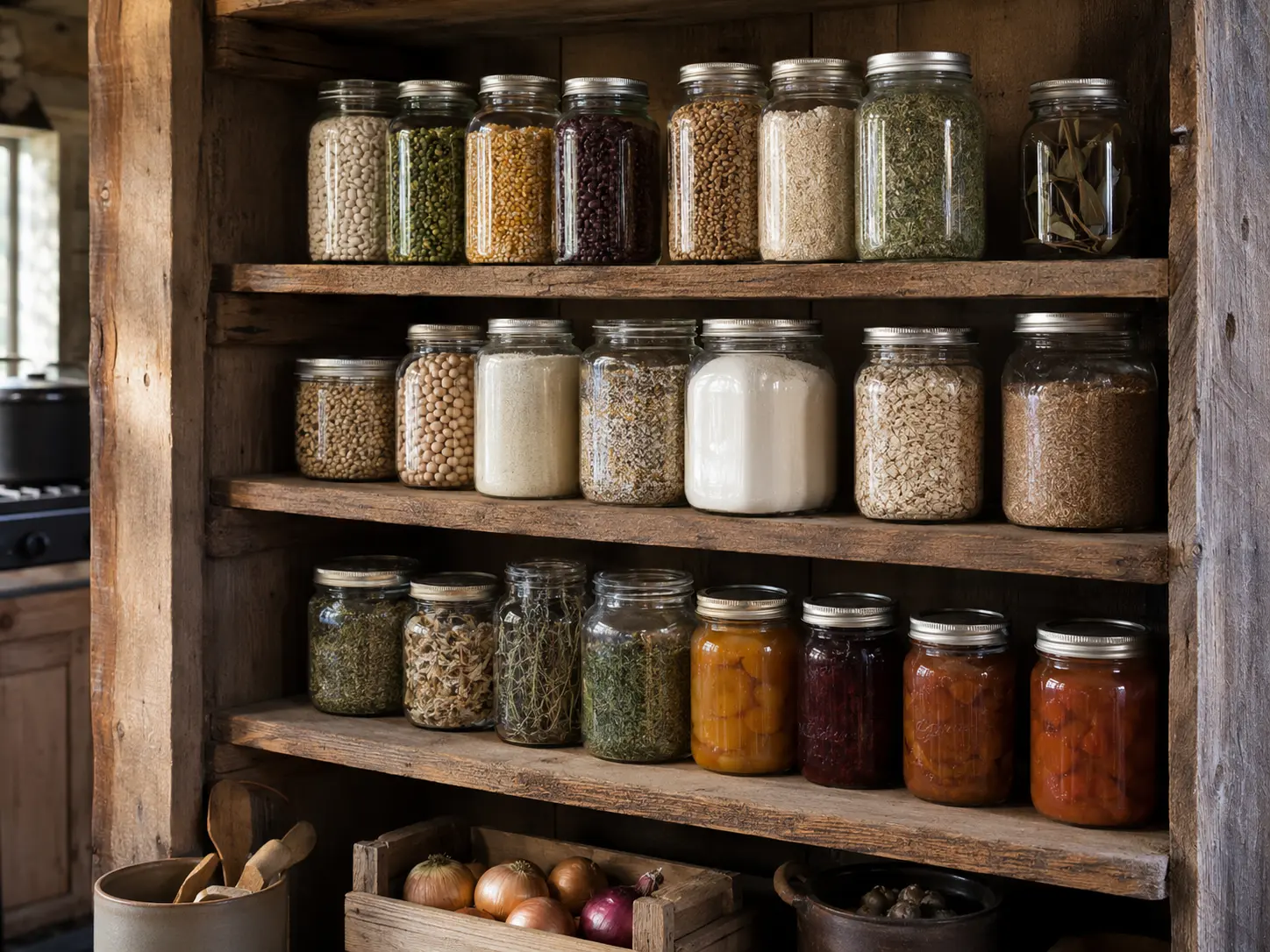
A money-saving pantry contains foods your household regularly eats, in quantities you can finish before quality declines. Begin with one or two weeks of dependable meals, label every container, rotate older food forward, and add bulk quantities only after measuring actual use.
Print a clean copy or save it as a PDF for the kitchen.
Build from meals, not from product lists
Generic pantry checklists encourage people to buy dozens of ingredients they may never use. Reverse the process: list ten inexpensive meals your household already likes, then identify the ingredients shared across those meals.
A practical core might include oats, rice, pasta, beans, canned tomatoes, flour, cooking oil, broth ingredients, and a small group of seasonings. Your list should reflect your culture, dietary needs, storage space, and cooking schedule.
Use a three-zone rotation system
Keep open containers and soon-to-expire foods in a visible “use first” zone. Store ordinary working stock behind it. Reserve a final zone for sealed backup quantities.
Write the purchase or opening date on containers. Clear labeling is more valuable than matching jars because it prevents duplicates and makes meal planning faster.
- Zone 1: open and use-first foods.
- Zone 2: normal weekly cooking stock.
- Zone 3: sealed backup stock.
Bulk buying has one strict condition
A lower unit price is not a saving if part of the product spoils, becomes infested, loses quality, or simply remains unused. The EPA specifically notes that large quantities save money only when the food is used before it spoils.
Before increasing a quantity, record how long the previous package lasted. That simple number is your household’s better buying guide.
Run a ten-minute weekly pantry meeting
Once a week, scan the refrigerator, freezer, and use-first pantry zone. Select two ingredients that need attention and build upcoming meals around them. This creates a closed loop between buying, storage, and cooking.
Frequently asked questions
How much food should a beginner pantry hold?
Start with enough shelf-stable ingredients for roughly one to two weeks of meals you already prepare. Expand only after observing what you reliably use.
Are glass jars required?
No. Food-safe airtight containers are useful, but matching glass jars are optional. Clear labeling, suitable storage conditions, and rotation matter more.
Is buying in bulk always cheaper?
No. Compare unit price, storage needs, realistic consumption, and potential waste before buying a larger quantity.
Sources and further reading
This article may use AI-assisted research organization and drafting. Claims involving safety, energy, or household costs are checked against the named sources above. Read about the founder and our editorial standards.