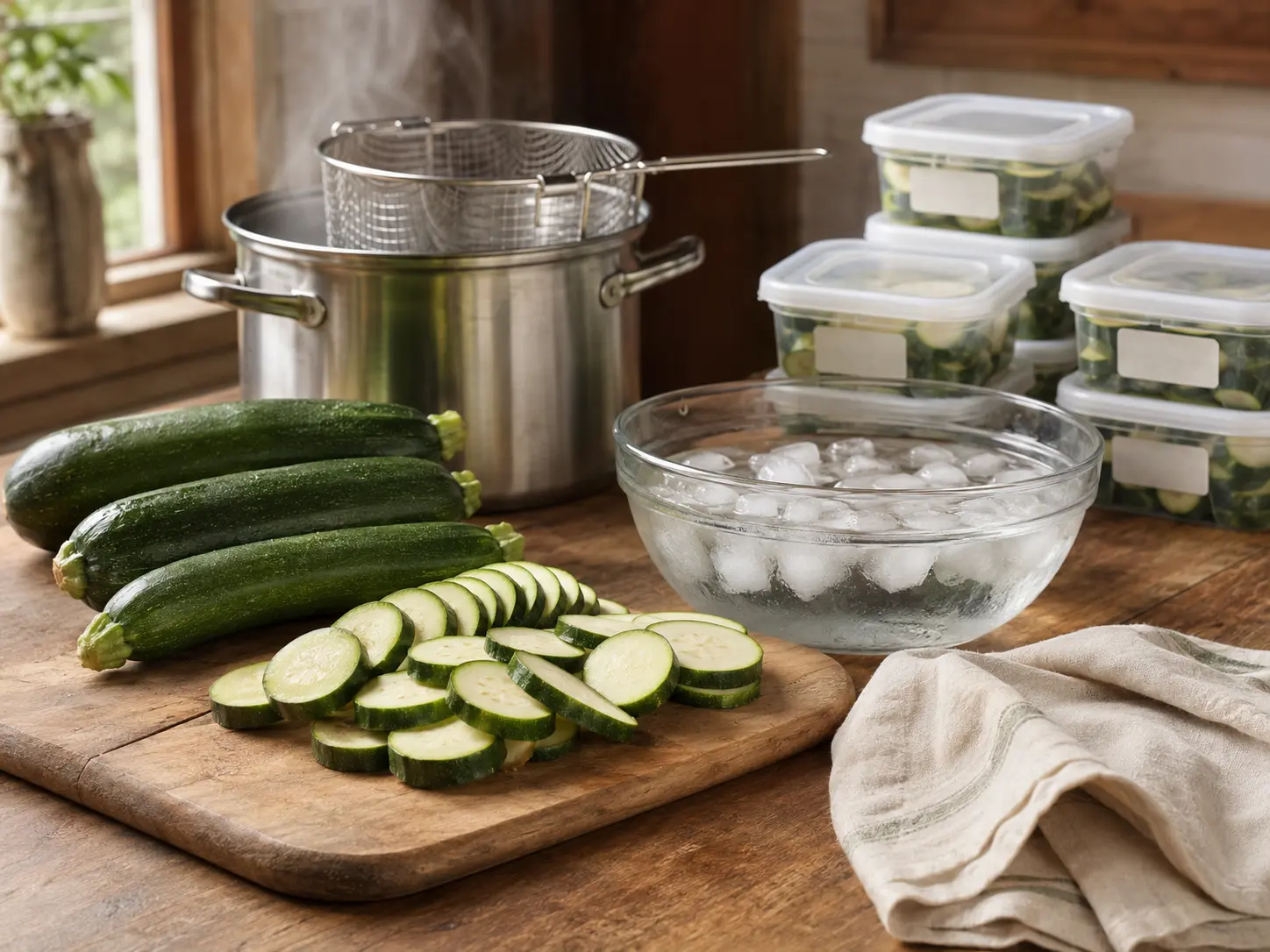
You can physically freeze raw zucchini, but for dependable long-term quality, follow tested guidance and blanch it first. The National Center for Home Food Preservation recommends water-blanching 1/2-inch slices for 3 minutes. For grated zucchini intended for baking, steam-blanch small batches for 1 to 2 minutes, until translucent, then cool, package, and freeze.
Print a clean copy or save it as a PDF for the kitchen.
Why blanching matters before freezing zucchini
Freezing slows changes in food, but it does not stop every enzyme action. The National Center for Home Food Preservation explains that blanching slows or stops enzymes that can damage flavor, color, texture, and nutrients during frozen storage.
Skipping blanching is therefore mainly a quality problem, not a magic safety shortcut. Freezing also does not destroy all harmful microorganisms, so start with sound produce, wash it under cold running water, use clean equipment, and keep the freezer at 0°F (-18°C) or below.
How to freeze sliced zucchini
Choose young, tender zucchini with sound skin. Rinse under cold running water; do not use soap, bleach, or produce disinfectants. Cut the zucchini into 1/2-inch slices.
Lower a manageable batch into vigorously boiling water. Once the water returns to a boil, blanch for 3 minutes. Cool the slices promptly in cold or ice water for about the same length of time, then drain thoroughly.
- Pack the cooled slices in freezer-safe containers or bags.
- Leave about 1/2 inch of headspace in rigid containers.
- Remove excess air from bags without crushing the slices.
- Label the package with the food, preparation, and date.
- Freeze promptly at 0°F (-18°C) or below.
How to freeze grated zucchini for baking
For zucchini bread, muffins, or fritters, wash and grate young zucchini. The tested method is to steam-blanch small quantities for 1 to 2 minutes, until translucent.
Pack the hot grated zucchini in recipe-size portions, leaving 1/2 inch of headspace. Cool the containers in cold water, seal, label, and freeze. If the zucchini is watery after thawing, the National Center for Home Food Preservation says to discard the liquid before using it.
What happens if you freeze it raw
Raw zucchini will freeze, but the result is more likely to lose color, flavor, and texture during storage because its enzymes were not inactivated. It may still be usable in soup, sauce, or baking where a soft texture matters less, but that is not the tested best-quality method.
Do not confuse freezing with shelf-stable preservation. Frozen zucchini must remain frozen. Zucchini is a low-acid vegetable, so improvised water-bath canning is not a safe alternative.
How long frozen zucchini keeps
The National Center for Home Food Preservation gives an approximate best-quality range of 8 to 12 months for properly prepared fruits and vegetables stored at 0°F. Quality depends on blanching, packaging, freezer temperature, and how quickly the food froze.
Use the oldest packages first and plan the portions around meals you actually cook. Preserving a garden surplus is frugal only when the food replaces a future purchase instead of remaining forgotten in the freezer.
Is this specifically an Amish method?
No. Freezing garden surplus is a broad modern home-preservation practice and should not be presented as uniquely Amish. Some Amish households use freezers while technology practices vary across affiliations and communities.
Plain & Frugal treats this as an old-fashioned use-what-you-grow habit updated with current food-preservation guidance—not as proof of one universal Amish tradition.
Frequently asked questions
Can I freeze shredded zucchini without blanching?
The tested best-quality method from the National Center for Home Food Preservation is to steam-blanch small quantities for 1 to 2 minutes, until translucent, before cooling and freezing.
Do I need to peel zucchini before freezing it?
The tested instructions call for choosing young, tender squash, washing it, and slicing or grating it; they do not require peeling.
Can I freeze a whole zucchini?
The tested home-freezing methods cited here use 1/2-inch slices or grated zucchini. Whole zucchini would freeze slowly and be difficult to use, so prepare it before freezing.
Why is my zucchini watery after thawing?
Zucchini naturally contains substantial water and freezing changes its texture. For grated zucchini, discard the thawed liquid if the recipe does not need it, following the National Center for Home Food Preservation guidance.
Sources and further reading
- National Center for Home Food Preservation — Freezing Summer Squash
- National Center for Home Food Preservation — Blanching Vegetables
- National Center for Home Food Preservation — Frozen Food Storage Times
- FoodSafety.gov — Safe Ways to Handle and Clean Produce
- Penn State Extension — Freezing Vegetables
This article may use AI-assisted research organization and drafting. Claims involving safety, energy, or household costs are checked against the named sources above. Read about the founder and our editorial standards.